The primary purpose of water jet looms is to enhance productivity while maintaining fabric quality. Compared to traditional shuttle looms, they offer faster weaving speeds, lower energy consumption, and reduced mechanical wear due to fewer moving parts.
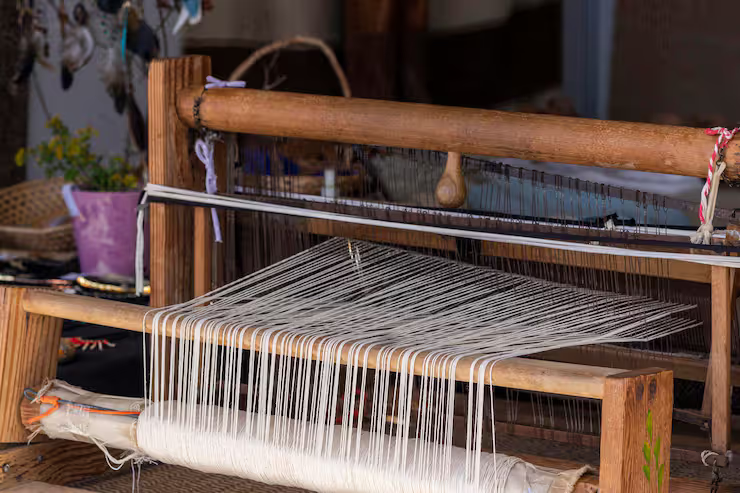
How Water Jet Looms Work
Water jet looms operate using a simple yet effective mechanism. Instead of a shuttle or air jet, they rely on a controlled jet of water to carry the weft yarn through the warp shed.
The process involves:
- Warp yarns are arranged vertically on the loom
- A shedding mechanism opens a path (shed) between warp threads
- A high-pressure water jet propels the weft yarn through the shed
- The yarn is inserted across the fabric width
- A beating-up mechanism pushes the yarn into place to form the fabric
This method ensures smooth insertion of yarn, especially for synthetic fibers that can withstand moisture without damage.
Key Components of Water Jet Looms
Essential Parts of the Machine
- Water Pump System: Generates high-pressure water jets for weft insertion
- Nozzle System: Directs and controls the water stream accurately
- Warp Beam: Holds and feeds warp yarns
- Weft Accumulator: Stores and releases weft yarn efficiently
- Reed and Heald Frame: Controls yarn positioning and fabric formation
- Take-up Mechanism: Collects the woven fabric
- Electronic Control Unit: Manages speed, timing, and automation
Each component is designed to ensure precision, speed, and consistent fabric quality.
Types of Water Jet Looms
Common Variations in Industry
- Single Nozzle Looms: Suitable for simple fabric designs
- Multi-Nozzle Looms: Used for complex and wider fabrics
- Electronic Water Jet Looms: Equipped with digital controls for automation
- High-Speed Looms: Designed for large-scale industrial production
Different types are selected based on fabric requirements, production scale, and operational efficiency.
Importance in Textile Manufacturing
Water jet looms play a critical role in modern textile production due to their ability to produce fabrics quickly and consistently. Their importance is evident in industries where efficiency and quality are essential.
They are especially valuable for:
- High-volume fabric production
- Manufacturing synthetic textiles
- Reducing operational downtime
- Improving production accuracy
These looms contribute significantly to industrial automation and textile innovation.
Real-World Applications
Where Water Jet Looms Are Used
- Apparel manufacturing (sportswear, linings)
- Home textiles (curtains, upholstery fabrics)
- Industrial textiles (filter fabrics, packaging materials)
- Technical textiles (water-resistant fabrics)
Their ability to handle continuous filament yarns makes them ideal for specialized fabric production.
Problems Solved by Water Jet Looms
Water jet looms address several challenges faced in traditional weaving:
- Increased Production Speed: Faster weaving compared to shuttle looms
- Reduced Mechanical Wear: Fewer moving parts minimize maintenance
- Improved Fabric Quality: Smooth weft insertion reduces defects
- Energy Efficiency: Lower power consumption compared to air jet looms
- Noise Reduction: Quieter operation in industrial environments
These advantages make them a reliable solution for modern textile operations.
Key Features of Water Jet Looms
Performance and Efficiency Highlights
- High-speed weaving capability
- Precise weft insertion using water jets
- Low vibration and noise levels
- Automated control systems
- Consistent fabric quality
- Suitable for hydrophobic yarns
These features contribute to improved operational performance and scalability.
Comparison Table: Water Jet Looms vs Other Looms
| Feature | Water Jet Looms | Air Jet Looms | Shuttle Looms |
|---|---|---|---|
| Weft Insertion Method | Water Jet | Air Pressure | Shuttle |
| Speed | High | Very High | Low |
| Energy Consumption | Moderate | High | Moderate |
| Fabric Type | Synthetic | Wide range | Natural & synthetic |
| Noise Level | Low | Moderate | High |
| Maintenance | Low | Moderate | High |
| Automation | High | High | Low |
Recent Trends and Developments (2025–2026)
The textile industry has seen notable advancements in water jet loom technology over the past year:
- Smart Automation (2025): Integration of IoT-based monitoring systems for real-time performance tracking
- Water Recycling Systems (2025): New designs reduce water consumption by reusing filtered water
- Energy Optimization (2026): Improved motor systems enhance efficiency and reduce power usage
- AI-Based Fabric Control (2026): Use of artificial intelligence to detect defects and optimize weaving patterns
- Eco-Friendly Innovations (2026): Focus on reducing environmental impact through sustainable design
These developments aim to make water jet looms more efficient, environmentally responsible, and technologically advanced.
Regulations and Environmental Considerations
Water jet looms must comply with environmental and industrial regulations, particularly related to water usage and waste management.
Key considerations include:
- Proper wastewater treatment systems
- Compliance with industrial water discharge standards
- Efficient water recycling practices
- Noise and workplace safety regulations
Many countries have introduced stricter guidelines to ensure sustainable textile production.
Tools and Learning Resources
Useful Platforms and Technologies
- Textile engineering software for loom simulation
- Industrial automation systems for monitoring
- Online courses in textile manufacturing technology
- Technical manuals from loom manufacturers
- Industry research publications and journals
These resources help professionals and students understand and operate water jet loom systems effectively.
FAQs
What types of fabrics are suitable for water jet looms?
Water jet looms are best suited for synthetic filament yarns such as polyester and nylon, as these materials are resistant to water.
Why are water jet looms not used for cotton fabrics?
Cotton absorbs water, which can affect yarn strength and fabric quality, making it unsuitable for water jet weaving.
How does water consumption impact operations?
Modern water jet looms use recycling systems to minimize water usage, improving sustainability and reducing waste.
Are water jet looms energy efficient?
Yes, they generally consume less energy than air jet looms due to simpler weft insertion mechanisms.
What is the main advantage of water jet looms?
The primary advantage is high-speed production with consistent fabric quality and reduced mechanical wear.
Conclusion
Water jet looms represent a significant advancement in textile manufacturing technology. By using high-pressure water for weft insertion, they offer a combination of speed, efficiency, and precision that meets the demands of modern industry. Their suitability for synthetic fabrics, along with recent innovations in automation and sustainability, makes them an essential tool in large-scale textile production.
As the industry continues to evolve, water jet looms are expected to become even more efficient and environmentally friendly, supporting the growing need for high-quality textile manufacturing.