The purpose of resin art is to combine aesthetics with functionality. Its glass-like finish, depth, and ability to preserve objects make it popular in both artistic and commercial design contexts. Resin art is widely used in interior decor, product design, and custom artwork.
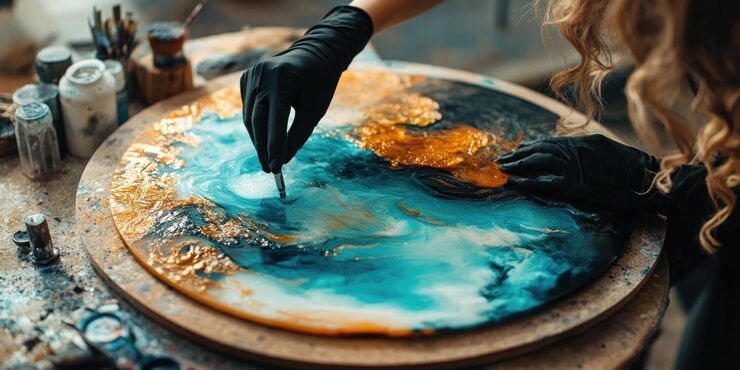
How Resin Art Works
Resin art is based on a chemical curing process. Two main components resin and hardener are mixed in a specific ratio. Once combined, they undergo a reaction that gradually hardens the mixture.
The process typically involves:
- Measuring resin and hardener accurately
- Mixing thoroughly to avoid air bubbles
- Adding pigments, dyes, or inclusions
- Pouring onto a surface or into molds
- Allowing curing over several hours or days
Temperature, humidity, and mixing technique all influence the final result. Proper curing ensures strength, clarity, and durability.
Importance and Real-World Applications
Resin art has grown beyond hobby-level creativity into a versatile design and manufacturing method. Its importance lies in its adaptability and durability.
Common applications include:
- Interior design elements such as tabletops and wall art
- Jewelry and accessories
- Industrial coatings and protective finishes
- Custom branding products
- Furniture design with embedded materials
It solves several challenges:
- Provides a protective, water-resistant coating
- Enhances visual depth and color vibrancy
- Allows preservation of organic or delicate materials
- Offers customization for unique design needs
Key Features of Resin Art
Material Properties
- High-gloss finish
- Strong adhesion to surfaces
- Resistance to moisture and chemicals
- Transparent or opaque finishes
Design Flexibility
- Supports pigments, metallic powders, and inks
- Can embed objects like flowers or stones
- Works on wood, canvas, metal, and plastic
Durability
- Long-lasting and scratch-resistant
- UV-resistant variants available
- Suitable for both indoor and outdoor use
Types of Resin Used in Art
Epoxy Resin
- Most common for art projects
- Clear finish with minimal odor
- Suitable for beginners
Polyurethane Resin
- Faster curing time
- Strong and flexible
- Used for industrial and advanced applications
Polyester Resin
- Cost-effective for large projects
- Strong but emits strong fumes
- Requires careful handling
Resin Art Techniques
Common Methods
- Pouring: Creates abstract fluid patterns
- Layering: Builds depth and texture
- Geode Style: Mimics natural crystal formations
- Ocean Art: Simulates waves and water effects
- Casting: Used in molds for jewelry or objects
Surface Applications
- Canvas art
- Wooden furniture
- Coasters and trays
- Wall panels
Tools and Materials
Essential Tools
- Mixing cups and sticks
- Heat gun or torch (for bubble removal)
- Silicone molds
- Protective gloves and masks
Optional Tools
- Pigments and alcohol inks
- Glitter, stones, or decorative elements
- Leveling tools for flat surfaces
Table: Comparison of Resin Types
| Feature | Epoxy Resin | Polyurethane Resin | Polyester Resin |
|---|---|---|---|
| Curing Time | Moderate | Fast | Fast |
| Clarity | High | Medium | Medium |
| Ease of Use | Beginner-friendly | Intermediate | Advanced |
| Odor Level | Low | Moderate | High |
| Durability | High | Very High | High |
| Best Use | Art & crafts | Industrial design | Large-scale projects |
Recent Trends and Developments (2025–2026)
Resin art continues to evolve with new materials and techniques:
- Eco-friendly resins (2025): Bio-based and low-toxicity resins are gaining popularity due to environmental concerns
- UV-resistant coatings (2025): Improved formulations reduce yellowing over time
- 3D resin printing integration (2026): Combining resin art with additive manufacturing techniques
- Smart pigments (2026): Color-changing and light-reactive materials are becoming more accessible
- Digital design integration: Artists are using software tools to plan patterns before pouring
These trends reflect a shift toward sustainability, precision, and innovation.
Regulations and Safety Considerations
Working with resin involves chemical handling, so safety is important.
Safety Guidelines
- Work in well-ventilated areas
- Use gloves and protective masks
- Avoid direct skin contact
- Follow manufacturer instructions carefully
Environmental Regulations
- Some regions regulate chemical disposal
- Eco-friendly alternatives are encouraged
- Proper waste management is essential
Compliance ensures safe usage and reduces environmental impact.
Useful Tools and Learning Resources
Digital Platforms
- Online tutorials and video courses
- Design software for pattern planning
- Community forums for artists
Learning Resources
- Art workshops and training sessions
- Educational blogs and guides
- Material manufacturer documentation
These resources help beginners and professionals improve their skills.
Advantages and Limitations
Advantages
- High aesthetic appeal
- Durable and versatile
- Customizable designs
- Wide range of applications
Limitations
- Requires precise mixing
- Sensitive to environmental conditions
- Safety precautions are necessary
- Initial learning curve
FAQs
What is resin art used for?
Resin art is used for decorative pieces, furniture design, jewelry, and protective coatings. It combines visual appeal with durability.
Is resin art suitable for beginners?
Yes, epoxy resin is beginner-friendly and widely used for learning basic techniques.
How long does resin take to cure?
Curing time varies but typically ranges from 24 to 72 hours depending on the type and conditions.
Is resin art safe?
It is safe when proper precautions are followed, such as ventilation and protective equipment.
Can resin art be used outdoors?
Yes, but UV-resistant resin is recommended to prevent discoloration over time.
Conclusion
Resin art is a versatile and evolving creative field that blends science and design. Its ability to produce durable, glossy, and visually engaging surfaces makes it valuable across multiple industries. From artistic expression to functional design, resin art offers endless possibilities.
With advancements in eco-friendly materials and innovative techniques, resin art continues to grow in relevance. Understanding its materials, processes, and safety considerations allows individuals to create high-quality work while minimizing risks. Whether used for personal creativity or professional applications, resin art remains a powerful medium in modern design.