The primary purpose of IoT-enabled machinery is to improve operational efficiency, reduce downtime, and enable data-driven decision-making. By transforming traditional machines into smart, connected systems, industries can monitor performance, automate processes, and optimize productivity across manufacturing, energy, logistics, and more.
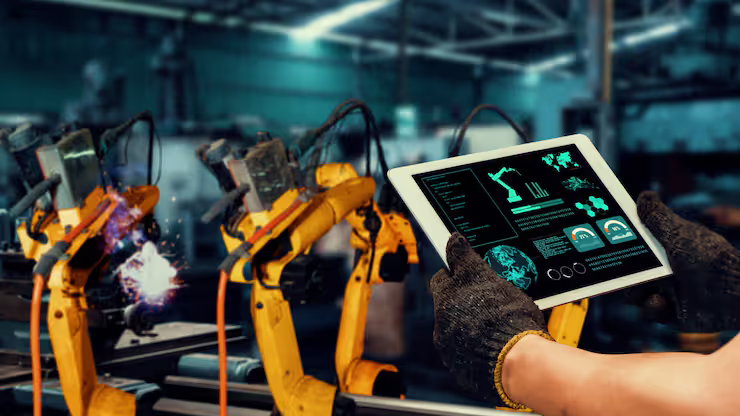
How IoT-Enabled Machinery Works
IoT-enabled machinery operates through a combination of hardware, software, and connectivity layers. Each machine is equipped with sensors and communication modules that gather and transmit data.
The process typically follows these steps:
- Sensors collect data such as temperature, pressure, vibration, and usage
- Edge devices process data locally for quick insights
- Data is transmitted via networks like Wi-Fi, 5G, or industrial Ethernet
- Cloud platforms store and analyze data using advanced analytics
- Dashboards and applications provide actionable insights to users
This structure allows continuous monitoring and intelligent automation, enabling machines to respond dynamically to changing conditions.
Key Components of IoT-Enabled Machinery
Hardware Components
- Sensors (temperature, motion, vibration, humidity)
- Actuators for automated control
- Embedded systems and controllers
Connectivity Infrastructure
- Wireless protocols (Wi-Fi, Bluetooth, LoRaWAN)
- Industrial networks (Ethernet/IP, Modbus)
- 5G-enabled communication for real-time operations
Software and Platforms
- IoT platforms for data management
- Machine learning algorithms for predictive analytics
- Visualization dashboards for monitoring
Data Processing Layers
- Edge computing for low-latency processing
- Cloud computing for large-scale data storage and analysis
Importance of IoT-Enabled Machinery
IoT-enabled machinery plays a critical role in modern industrial transformation. It helps industries transition toward smart manufacturing and Industry 4.0 frameworks.
Key benefits include:
- Improved operational efficiency through real-time monitoring
- Reduced downtime with predictive maintenance
- Enhanced safety by detecting anomalies early
- Better resource utilization and energy efficiency
- Increased transparency across production processes
By enabling continuous data flow, organizations can identify inefficiencies and optimize performance at every level.
Real-World Use Cases
Manufacturing Industry
- Smart factories use IoT-enabled machines to monitor production lines, reduce waste, and automate quality control. Predictive maintenance prevents unexpected breakdowns.
- Power plants and renewable energy systems use connected machinery to track performance, optimize output, and detect faults in real time.
- IoT-enabled equipment tracks shipments, monitors storage conditions, and ensures efficient inventory management.
Agriculture
- Smart farming equipment uses IoT sensors to monitor soil conditions, irrigation systems, and crop health, improving yield and sustainability.
- Connected medical machinery monitors equipment performance and ensures accurate diagnostics and patient safety.
Problems Solved by IoT-Enabled Machinery
Traditional industrial systems often face challenges such as unplanned downtime, inefficient processes, and lack of visibility. IoT-enabled machinery addresses these issues effectively.
- Eliminates manual monitoring through automation
- Reduces maintenance costs with predictive analytics
- Enhances decision-making using real-time data
- Improves product quality through continuous feedback
- Minimizes energy consumption and waste
Types of IoT-Enabled Machinery
Smart Manufacturing Equipment
- Machines equipped with sensors and automation systems for production optimization.
- Equipment that uses data analytics to forecast failures before they occur.
- Self-operating machines that adjust performance based on real-time inputs.
- Machinery that can be controlled and monitored from remote locations.
- Robots that work alongside humans using IoT and AI integration.
Key Features of IoT-Enabled Machinery
Real-Time Monitoring
- Provides continuous data on machine performance and environmental conditions.
- Uses historical and real-time data to predict failures and optimize maintenance schedules.
- Enables machines to operate with minimal human intervention.
- Allows operators to monitor and control machinery from anywhere.
- Combines data from multiple sources for comprehensive insights.
Recent Trends and Developments (2025–2026)
Integration with AI and Machine Learning
- In 2025, industries increasingly adopted AI-driven IoT systems to enhance predictive maintenance and operational intelligence.
- The rollout of 5G networks in 2025–2026 improved real-time communication between machines, enabling faster data transmission and lower latency.
- Edge computing became more prominent in 2025, allowing data processing closer to machines, reducing delays and bandwidth usage.
- Digital twins virtual replicas of physical machines gained traction in 2026 for simulation, monitoring, and optimization.
- With rising cyber threats, industries implemented stronger security frameworks, including zero-trust architectures and encrypted communication protocols.
Regulations and Standards
IoT-enabled machinery must comply with various global and regional standards to ensure safety, data security, and interoperability.
- ISO/IEC 27001 for information security management
- IEC 62443 for industrial cybersecurity
- GDPR (for data protection in applicable regions)
- Industry-specific safety standards for machinery
Organizations must ensure compliance to protect sensitive data and maintain operational integrity.
Useful Tools, Platforms, and Learning Resources
IoT Platforms
- AWS IoT Core
- Microsoft Azure IoT Hub
- Google Cloud IoT
Data Analytics Tools
- Tableau
- Power BI
- Apache Kafka for real-time data streaming
Development Frameworks
- Node-RED for IoT workflows
- TensorFlow for machine learning integration
Learning Resources
- Online courses on Industrial IoT (IIoT)
- Technical documentation from cloud providers
- Industry reports on smart manufacturing
Table: Comparison of Traditional vs IoT-Enabled Machinery
| Feature | Traditional Machinery | IoT-Enabled Machinery |
|---|---|---|
| Monitoring | Manual | Real-time automated |
| Maintenance | Reactive | Predictive and proactive |
| Data Availability | Limited | Continuous and extensive |
| Efficiency | Moderate | High and optimized |
| Automation Level | Low | Advanced automation |
| Remote Access | Not available | Fully supported |
| Decision Making | Experience-based | Data-driven |
Challenges of IoT-Enabled Machinery
Despite its advantages, IoT-enabled machinery also presents certain challenges:
- High initial implementation complexity
- Data security and privacy concerns
- Integration with legacy systems
- Need for skilled workforce
- Dependence on reliable network connectivity
Addressing these challenges is essential for successful adoption.
FAQs
What is IoT-enabled machinery?
IoT-enabled machinery refers to industrial equipment connected to the internet, allowing data collection, monitoring, and automation through sensors and software.
How does IoT improve machine performance?
IoT improves performance by providing real-time data, enabling predictive maintenance, and optimizing operations through analytics.
Is IoT-enabled machinery secure?
Security depends on implementation. Using encryption, secure networks, and compliance standards helps protect systems from cyber threats.
Which industries benefit the most from IoT-enabled machinery?
Manufacturing, energy, logistics, agriculture, and healthcare are among the industries that benefit significantly from IoT integration.
What is predictive maintenance in IoT?
Predictive maintenance uses data from sensors to predict equipment failures before they occur, reducing downtime and improving efficiency.
Conclusion
IoT-enabled machinery represents a major advancement in industrial technology, transforming traditional equipment into intelligent, connected systems. By integrating sensors, connectivity, and data analytics, these machines provide real-time insights, enhance efficiency, and enable automation across various industries.
As technologies such as AI, 5G, and edge computing continue to evolve, IoT-enabled machinery will play an even more critical role in shaping the future of smart manufacturing and industrial operations. Organizations that adopt these systems effectively can achieve improved productivity, reduced downtime, and better decision-making in an increasingly data-driven world.