The main purpose of a CNC cutting machine is to improve accuracy, reduce human error, and increase production efficiency. It allows complex designs to be executed consistently, making it essential in modern industrial processes.
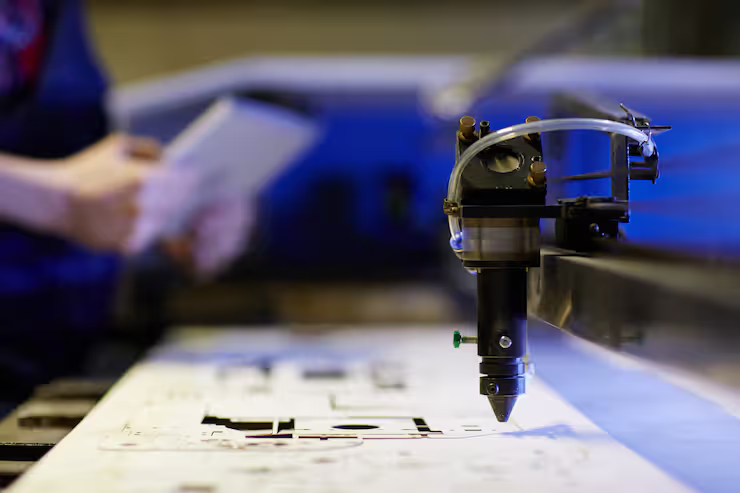
How CNC Cutting Machines Work
CNC cutting machines operate through a combination of software and mechanical components. The process begins with a digital design created using CAD (Computer-Aided Design) software. This design is then converted into machine-readable code using CAM (Computer-Aided Manufacturing) software.
The machine interprets this code and moves cutting tools along predefined paths to shape the material.
Key Steps in Operation
- Design creation using CAD software
- Conversion into G-code via CAM software
- Machine setup and material placement
- Automated cutting process
- Finishing and inspection
This automated workflow ensures consistent quality and reduces manual intervention.
Importance of CNC Cutting Machines
CNC cutting machines play a crucial role in modern manufacturing due to their precision and efficiency.
Key Benefits
- High accuracy and repeatability
- Reduced material waste
- Faster production cycles
- Ability to handle complex designs
- Improved safety with minimal manual handling
These advantages make CNC technology a core component of industrial automation and smart manufacturing systems.
Types of CNC Cutting Machines
Different types of CNC cutting machines are designed for specific materials and applications.
Common Types
- Laser Cutting Machines: Use focused laser beams for precise cutting
- Plasma Cutting Machines: Suitable for cutting conductive metals
- Waterjet Cutting Machines: Use high-pressure water for versatile cutting
- CNC Milling Machines: Remove material using rotating tools
- CNC Router Machines: Ideal for wood, plastics, and soft metals
Each type offers unique capabilities depending on the material and required precision.
Key Components of CNC Cutting Machines
Understanding the components helps in better operation and maintenance.
Main Components
- Controller Unit: Interprets G-code and controls movements
- Cutting Tool: Performs the actual cutting process
- Drive System: Includes motors and ball screws for movement
- Machine Bed: Holds the material securely
- Feedback System: Ensures accuracy through sensors
These components work together to deliver precise and efficient cutting operations.
Applications in Real-World Industries
CNC cutting machines are used across various sectors due to their versatility.
Industrial Applications
- Automotive manufacturing for parts and components
- Aerospace for precision-engineered structures
- Construction for metal and structural fabrication
- Electronics for circuit boards and enclosures
- Furniture production for customized designs
They solve challenges related to precision, scalability, and production speed.
Table: Comparison of CNC Cutting Machine Types
| Type | Material Compatibility | Precision Level | Common Use Case |
|---|---|---|---|
| Laser Cutting | Metals, plastics, wood | Very High | Fine detailing, engraving |
| Plasma Cutting | Conductive metals | High | Heavy metal cutting |
| Waterjet Cutting | Almost all materials | High | Heat-sensitive materials |
| CNC Milling | Metals, composites | Very High | Complex parts manufacturing |
| CNC Router | Wood, plastic, soft metals | Medium | Furniture and signage |
Key Features of CNC Cutting Machines
Modern CNC cutting machines come with advanced features that enhance productivity and precision.
Important Features
- Multi-axis cutting capabilities
- Automated tool changing systems
- Real-time monitoring and diagnostics
- Integration with CAD/CAM software
- High-speed cutting performance
These features enable manufacturers to achieve better efficiency and accuracy.
Recent Trends and Developments (2025–2026)
CNC cutting technology has evolved significantly in the past year, driven by advancements in automation and digital manufacturing.
Latest Trends
- AI integration for predictive maintenance (2025)
- IoT-enabled CNC machines for real-time monitoring (2025)
- Increased adoption of hybrid machines combining multiple cutting methods (2026)
- Improved energy efficiency and sustainability features (2025–2026)
- Advanced simulation software for error reduction before production
These developments are transforming CNC machines into smarter and more efficient systems.
Regulations and Safety Considerations
CNC cutting machines must comply with industrial safety standards and operational guidelines.
Key Regulations
- ISO 23125 for machine tool safety
- OSHA guidelines for workplace safety
- CE marking for equipment compliance in certain regions
Safety Practices
- Proper training for operators
- Use of protective equipment
- Regular maintenance and inspections
- Emergency stop mechanisms
Following these regulations ensures safe and reliable machine operation.
Tools and Learning Resources
Learning CNC cutting machine operation requires access to the right tools and platforms.
Useful Tools
- CAD software such as AutoCAD and SolidWorks
- CAM software like Fusion 360
- CNC simulation tools for practice
- G-code editors for programming
Learning Resources
- Online technical courses on CNC machining
- Industrial training institutes
- Manufacturer documentation and manuals
- Engineering forums and communities
These resources help beginners and professionals enhance their skills.
FAQs
What materials can CNC cutting machines handle?
CNC cutting machines can process metals, plastics, wood, composites, and even glass, depending on the type of machine used.
Is CNC cutting suitable for small-scale production?
Yes, CNC machines are highly adaptable and can be used for both small-scale and large-scale production with consistent quality.
How accurate are CNC cutting machines?
They offer extremely high precision, often within microns, making them ideal for complex and detailed work.
What is the difference between CNC cutting and manual cutting?
CNC cutting is automated and highly precise, while manual cutting depends on human skill and is less consistent.
Do CNC machines require programming knowledge?
Basic understanding of G-code and CAD/CAM software is helpful, but many modern systems offer user-friendly interfaces.
Conclusion
CNC cutting machines are a cornerstone of modern manufacturing, offering unmatched precision, efficiency, and versatility. By automating complex cutting processes, they reduce errors, save time, and improve production quality. With ongoing advancements such as AI integration and IoT connectivity, CNC technology continues to evolve, making it an essential tool for industries worldwide. Understanding how these machines work and their applications can help businesses and individuals leverage their full potential.