How Battery Manufacturing Equipment Works
Battery production is a multi-stage process involving material preparation, cell assembly, and finishing. Each stage relies on specific equipment designed for precision and consistency.
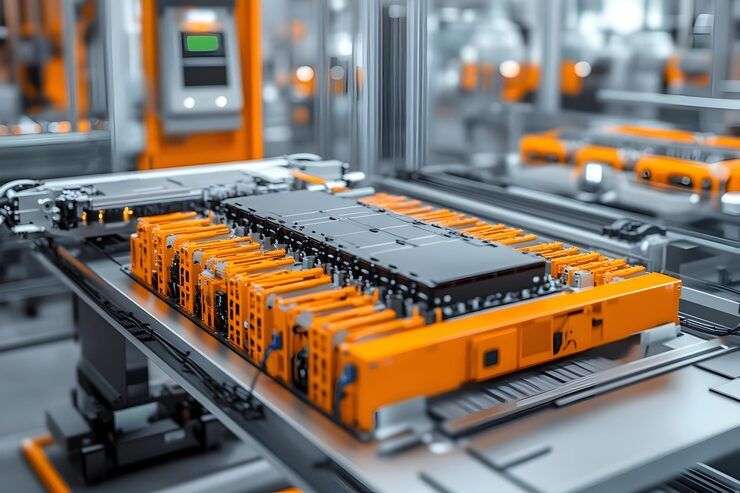
The process typically begins with electrode fabrication, where active materials are mixed, coated onto metal foils, and dried. These coated electrodes are then compressed and cut into desired shapes.
Next comes cell assembly. Depending on the battery type (lithium-ion, solid-state, or lead-acid), electrodes are stacked or wound with separators and placed into a casing. Electrolytes are then introduced to enable ion movement.
Finally, the battery undergoes formation and testing. This includes controlled charging cycles to stabilize performance and rigorous quality checks to ensure safety and reliability.
Importance of Battery Manufacturing Equipment
Battery production equipment plays a critical role in modern industries by enabling scalable and consistent manufacturing. Without these machines, it would be difficult to meet the global demand for energy storage.
Key importance includes:
- Ensuring precision in electrode coating and assembly
- Improving production speed and scalability
- Maintaining safety standards during chemical handling
- Supporting innovation in battery technologies
- Reducing defects and improving product lifespan
Industries such as electric mobility, renewable energy storage, and consumer electronics depend heavily on advanced battery manufacturing systems.
Real-World Use Cases
Battery manufacturing equipment is widely used across multiple sectors:
- Electric vehicles: Production of lithium-ion battery packs for cars, buses, and two-wheelers
- Renewable energy: Storage systems for solar and wind power
- Consumer electronics: Smartphones, laptops, and wearable devices
- Industrial backup systems: Uninterruptible power supply (UPS) systems
- Aerospace and defense: High-performance energy storage solutions
These applications highlight the importance of reliable and scalable manufacturing systems.
Key Components and Types of Equipment
Material Preparation Equipment
- Mixing machines for slurry preparation
- Coating machines for applying materials to electrodes
- Drying ovens for removing solvents
Electrode Processing Equipment
- Calendering machines for compression
- Slitting and cutting machines for shaping electrodes
- Stacking machines for layered cells
- Winding machines for cylindrical cells
- Electrolyte filling systems
Formation and Testing Equipment
- Charging and discharging systems
- Aging chambers for stabilization
- Inspection and quality control systems
- Robotics for assembly
- AI-based inspection tools
- Process monitoring software
Table: Key Battery Manufacturing Equipment and Functions
| Equipment Type | Function | Application Area |
|---|---|---|
| Coating Machine | Applies active material to electrodes | Lithium-ion battery production |
| Calendering Machine | Compresses electrode layers | Electrode processing |
| Slitting Machine | Cuts electrodes into precise widths | Cell preparation |
| Winding Machine | Rolls electrodes into cylindrical cells | Cell assembly |
| Electrolyte Filling System | Injects electrolyte into cells | Battery assembly |
| Formation Equipment | Performs initial charge cycles | Battery conditioning |
| Testing Systems | Ensures safety and performance | Quality control |
Key Features of Modern Equipment
Modern battery manufacturing systems are designed for efficiency, precision, and adaptability.
Advanced Features
- High-speed automation for large-scale production
- Precision control systems for uniform quality
- Integration with smart manufacturing technologies
- Real-time monitoring and data analytics
- Modular design for flexible production lines
These features help manufacturers meet increasing demand while maintaining strict quality standards.
Recent Trends and Developments
Battery manufacturing technology has seen significant advancements in the past year.
- 2025: Increased adoption of solid-state battery production equipment, improving energy density and safety
- 2026: Expansion of gigafactories globally, especially in Asia and Europe
- 2025: Integration of AI-driven quality inspection systems for defect detection
- 2025–2026: Growth in sustainable manufacturing practices, including recycling systems and reduced energy consumption
- 2025: Development of dry electrode technology to reduce environmental impact
These trends indicate a shift toward more efficient, sustainable, and intelligent manufacturing systems.
Regulations and Standards
Battery manufacturing is subject to strict regulations to ensure safety, environmental protection, and product quality.
Key regulatory areas include:
- Environmental compliance for chemical handling and waste disposal
- Safety standards for battery design and production
- Transportation regulations for hazardous materials
- Quality certifications such as ISO standards
- Recycling and sustainability guidelines
Compliance with these regulations ensures safe production and global market acceptance.
Useful Tools and Learning Resources
Tools and Platforms
- Manufacturing execution systems (MES) for production tracking
- Computer-aided design (CAD) tools for equipment design
- Simulation software for process optimization
- AI-based inspection systems
Learning Resources
- Online courses on battery technology and manufacturing
- Industry research reports on energy storage
- Technical documentation from equipment manufacturers
- Academic publications on advanced battery materials
These resources help professionals understand and improve battery production processes.
FAQs
What is battery manufacturing equipment?
Battery manufacturing equipment includes machines used to produce batteries, from material preparation to final testing.
What types of batteries are produced using this equipment?
Common types include lithium-ion, lead-acid, nickel-metal hydride, and emerging solid-state batteries.
Why is automation important in battery manufacturing?
Automation improves precision, reduces human error, increases production speed, and ensures consistent quality.
What are the main challenges in battery manufacturing?
Challenges include maintaining safety, managing complex chemical processes, ensuring quality control, and scaling production efficiently.
How is sustainability addressed in battery production?
Modern systems focus on energy efficiency, recycling materials, and reducing waste during manufacturing.
Conclusion
Battery manufacturing equipment is a cornerstone of modern energy systems, enabling the large-scale production of reliable and efficient batteries. From electrode preparation to final testing, each stage relies on specialized machinery designed for precision and consistency.
As demand for energy storage continues to grow, advancements in automation, sustainability, and smart manufacturing are shaping the future of this industry. Understanding these systems is essential for anyone involved in energy, technology, or industrial production.