How Printing Machines Work
Printing machines operate by transferring ink or toner onto a surface using specific techniques.
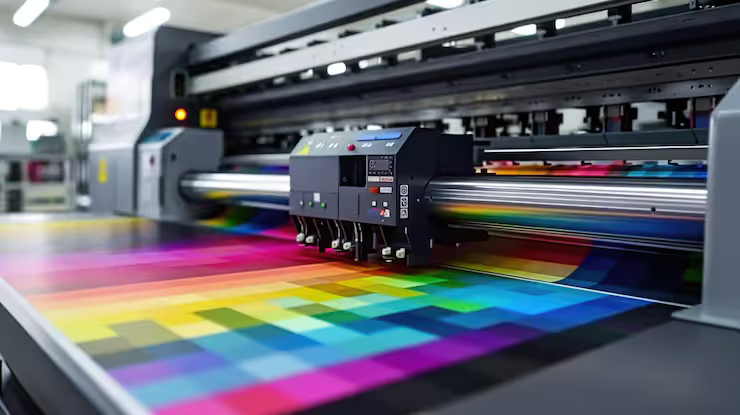
The exact process varies depending on the type of machine, but the general workflow includes:
- Preparing the design or content digitally or physically
- Converting the design into printable format (plates, files, or patterns)
- Applying ink through mechanical, chemical, or digital methods
- Transferring the image onto the material
- Drying or curing the printed output
Modern machines often integrate automation, sensors, and software to ensure precision and efficiency.
Importance of Printing Machines
Printing machines are essential for communication, branding, and industrial production. Their importance can be seen across multiple sectors:
- Publishing books, newspapers, and educational materials
- Producing packaging for consumer goods
- Supporting advertising through banners, brochures, and posters
- Enabling textile printing for fashion and design
- Assisting in industrial labeling and product identification
They help reduce manual effort, improve consistency, and allow high-volume output.
Types of Printing Machines
Offset Printing Machines
- Use plates and rubber blankets to transfer ink
- Ideal for high-volume printing like newspapers and magazines
- Offers high image quality and consistency
Digital Printing Machines
- Print directly from digital files without plates
- Suitable for short runs and customization
- Common in offices and small-scale production
Flexographic Printing Machines
- Use flexible plates and fast-drying inks
- Widely used in packaging and labeling
- Supports printing on various materials
Screen Printing Machines
- Push ink through a stencil or mesh screen
- Used for textiles, signage, and specialty printing
- Known for vibrant colors and durability
Gravure Printing Machines
- Use engraved cylinders to transfer ink
- Suitable for high-speed, large-scale printing
- Common in packaging and decorative printing
Key Components of Printing Machines
Mechanical and Functional Parts
- Printing plates or cylinders
- Ink rollers and distribution systems
- Substrate feeding system
- Drying or curing units
- Control panel and automation systems
Digital and Software Elements
- Design software integration
- Color management systems
- Print queue and workflow management
- Sensors for alignment and quality control
Features of Modern Printing Machines
Advanced Capabilities
- High-resolution printing for detailed output
- Automation for reduced human intervention
- Multi-material compatibility
- Energy-efficient operation
- Real-time monitoring and diagnostics
Performance Benefits
- Faster production speeds
- Reduced waste and errors
- Improved color accuracy
- Scalability for industrial needs
Real-World Applications
Printing machines are used across various industries:
- Publishing: Books, journals, newspapers
- Packaging: Labels, cartons, flexible packaging
- Textile Industry: Printed fabrics and garments
- Advertising: Posters, banners, promotional materials
- Manufacturing: Product labels, barcodes, instructions
They solve challenges related to mass communication, product identification, and visual presentation.
Comparison of Printing Machine Types
| Type | Best Use Case | Speed | Setup Complexity | Material Support |
|---|---|---|---|---|
| Offset | High-volume publishing | High | Medium | Paper |
| Digital | Short runs, customization | Medium | Low | Paper, labels |
| Flexographic | Packaging and labels | Very High | Medium | Plastic, paper |
| Screen | Textile and specialty items | Low | Low | Fabric, glass |
| Gravure | Large-scale packaging | Very High | High | Plastic, foil |
Recent Trends and Developments
In the past year, printing technology has seen several advancements:
- 2025: Increased adoption of eco-friendly inks and sustainable printing materials
- 2025: Integration of artificial intelligence for print quality control and predictive maintenance
- 2026: Growth in 3D printing technologies for manufacturing and prototyping
- 2026: Expansion of cloud-based print management systems for remote operations
These trends focus on sustainability, efficiency, and digital transformation.Regulations and Standards
Printing machines and processes are subject to various regulations:
- Environmental standards for ink usage and waste management
- Safety guidelines for machinery operation
- Compliance with emission norms for industrial printing
- Quality standards for packaging and labeling
Organizations must follow local and international guidelines to ensure safe and responsible operations.
Tools and Learning Resources
Software and Platforms
- Adobe Illustrator for design creation
- CorelDRAW for vector graphics
- RIP software for print processing
- Print management systems for workflow automation
Learning Resources
- Technical training institutes for printing technology
- Online courses on digital printing and design
- Industry publications and research reports
- Manufacturer manuals and documentation
FAQs
What is the main purpose of a printing machine?
A printing machine is used to reproduce text and images on various surfaces efficiently and consistently.
Which printing machine is best for high-volume production?
Offset and gravure printing machines are commonly used for large-scale, high-speed production.
How is digital printing different from traditional printing?
Digital printing does not require physical plates and allows direct printing from digital files, making it faster for small batches.
Are printing machines environmentally friendly?
Modern machines are becoming more sustainable with eco-friendly inks, reduced waste, and energy-efficient designs.
What industries rely most on printing machines?
Publishing, packaging, textiles, advertising, and manufacturing industries heavily depend on printing machines.
Conclusion
Printing machines are a fundamental part of modern industry, enabling efficient production of printed materials across various sectors. From traditional offset presses to advanced digital systems, these machines continue to evolve with technological advancements.
Their ability to deliver high-quality output, support diverse applications, and adapt to changing demands makes them essential tools in communication and manufacturing. As innovations continue, printing machines are becoming more sustainable, intelligent, and versatile, shaping the future of production and design.