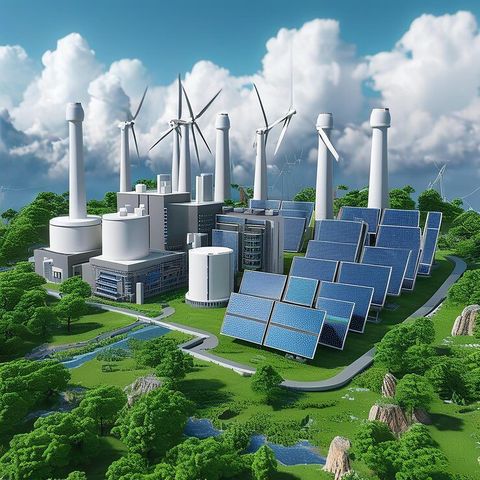
These systems are widely used in power generation, aviation, oil and gas industries, and industrial manufacturing due to their high efficiency, reliability, and ability to produce large amounts of power quickly. Gas turbines are especially important in modern energy infrastructure because they support grid stability and can respond rapidly to changing electricity demand.
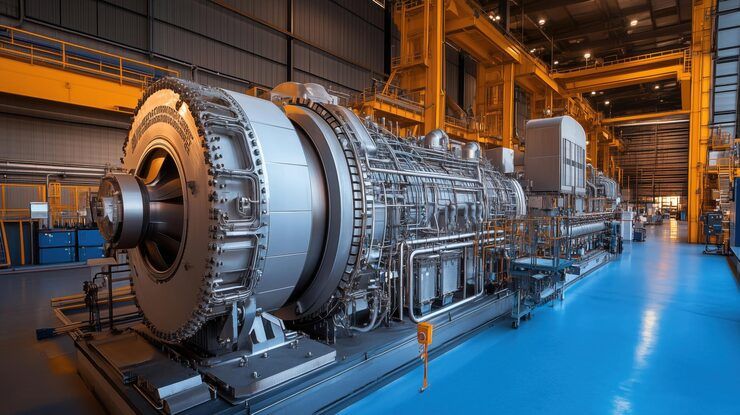
How Gas Turbine Systems Work
A gas turbine system operates through a thermodynamic cycle known as the Brayton cycle. The process involves three main stages:
- Air intake and compression
- Combustion of fuel with compressed air
- Expansion of hot gases through turbine blades
The turbine is connected to a generator or mechanical equipment, converting rotational energy into electricity or mechanical output.
Key Steps in Operation
- Air is drawn into the compressor and pressurized
- Fuel is injected into the combustion chamber
- Ignition produces high-temperature gases
- Expanding gases spin turbine blades
- Energy is transferred to a generator or shaft
This continuous process allows gas turbines to operate efficiently for long durations.
Importance and Real-World Applications
Gas turbine systems play a crucial role in multiple industries due to their flexibility and efficiency.
Major Applications
- Power generation plants (combined cycle and simple cycle systems)
- Aircraft propulsion systems
- Oil and gas pipeline compression
- Marine propulsion systems
- Industrial manufacturing processes
These systems solve several challenges in modern energy and industrial sectors:
- Provide fast-start power during peak demand
- Support renewable energy integration by stabilizing grids
- Enable high-efficiency energy production
- Reduce downtime in industrial operations
Key Components of Gas Turbine Systems
Gas turbine systems consist of several critical components that work together to ensure efficient performance.
Core Components
- Compressor: Increases air pressure before combustion
- Combustion chamber: Mixes fuel and air for ignition
- Turbine: Converts energy from hot gases into mechanical power
- Generator: Produces electricity from rotational energy
- Exhaust system: Releases gases and may recover heat
Supporting Components
- Cooling systems
- Fuel delivery systems
- Control and monitoring systems
- Heat recovery units (in combined cycle systems)
Types of Gas Turbine Systems
Gas turbine systems are categorized based on their application and configuration.
Main Types
- Open cycle gas turbines: Used for quick power generation
- Combined cycle gas turbines (CCGT): Improve efficiency by using exhaust heat
- Aeroderivative turbines: Lightweight and used in aviation and mobile power
- Heavy-duty turbines: Designed for continuous industrial use
Each type is selected based on efficiency requirements, load conditions, and operational environment.
Key Features of Gas Turbine Systems
Gas turbine systems offer several advantages that make them essential in modern infrastructure.
Important Features
- High power-to-weight ratio
- Fast startup and shutdown capability
- Lower emissions compared to traditional coal systems
- High operational flexibility
- Compact design
These features make gas turbines suitable for both base-load and peak-load power generation.
Gas Turbine Efficiency and Performance Table
| Parameter | Typical Range | Description |
|---|---|---|
| Efficiency (Simple Cycle) | 30% – 40% | Basic turbine efficiency |
| Efficiency (Combined Cycle) | 55% – 65% | Enhanced efficiency using heat recovery |
| Operating Temperature | 1,000°C – 1,500°C | Turbine inlet temperature |
| Power Output | 1 MW – 500+ MW | Depends on turbine size |
| Startup Time | Minutes to 1 hour | Faster than many traditional power systems |
Recent Trends and Developments (2025–2026)
Gas turbine technology continues to evolve with innovations aimed at improving efficiency and sustainability.
Key Developments
- Hydrogen-ready turbines: Many manufacturers introduced turbines capable of operating with hydrogen blends (2025)
- AI-based predictive maintenance: Advanced analytics systems are being deployed to reduce downtime
- Carbon capture integration: Combined cycle plants are integrating carbon capture technologies
- Digital twin technology: Real-time simulation models are improving performance monitoring
- Improved materials: Advanced alloys and coatings increase turbine durability at high temperatures
These developments are helping industries reduce emissions while maintaining high performance.
Regulations and Environmental Considerations
Gas turbine systems are subject to environmental and safety regulations in many countries.
Key Regulatory Areas
- Emission standards for nitrogen oxides (NOx) and carbon dioxide (CO₂)
- Efficiency requirements for power plants
- Industrial safety and operational standards
- Noise and air quality regulations
Organizations must comply with national and international guidelines such as environmental protection laws and energy efficiency directives.
Tools, Platforms, and Learning Resources
Understanding gas turbine systems requires access to technical tools and educational resources.
Useful Tools and Platforms
- Simulation software for thermodynamic analysis
- Industrial monitoring systems for real-time performance
- Engineering design software for turbine modeling
Learning Resources
- Engineering textbooks on thermodynamics and fluid mechanics
- Online courses in energy systems and power engineering
- Technical publications and industry reports
- University research programs in mechanical and aerospace engineering
These resources help professionals and students build expertise in gas turbine technology.
Challenges in Gas Turbine Systems
Despite their advantages, gas turbine systems face certain challenges.
Common Challenges
- High initial infrastructure complexity
- Dependence on fossil fuels in many applications
- Maintenance requirements due to high operating temperatures
- Emission concerns in non-optimized systems
Ongoing research is focused on addressing these challenges through cleaner fuels and improved designs.
Future Outlook
Gas turbine systems are expected to remain a key part of global energy systems, especially as hybrid and low-carbon technologies evolve.
Future Trends
- Increased adoption of hydrogen and alternative fuels
- Integration with renewable energy systems
- Enhanced digital monitoring and automation
- Development of ultra-efficient combined cycle plants
These trends indicate a shift toward more sustainable and intelligent energy systems.
FAQs
What is a gas turbine system used for?
Gas turbine systems are used for power generation, aircraft propulsion, industrial processes, and mechanical drive applications.
How efficient are gas turbine systems?
Simple cycle turbines typically achieve 30–40% efficiency, while combined cycle systems can exceed 60%.
What fuel do gas turbines use?
They commonly use natural gas, but can also operate on diesel, biofuels, and increasingly hydrogen blends.
What is the Brayton cycle?
It is the thermodynamic cycle that describes how gas turbines operate using compression, combustion, and expansion.
Are gas turbines environmentally friendly?
They produce fewer emissions than coal-based systems, and newer technologies further reduce environmental impact.
Conclusion
Gas turbine systems are a cornerstone of modern energy and industrial infrastructure. Their ability to deliver efficient, flexible, and high-output power makes them essential in sectors ranging from electricity generation to aviation. With ongoing advancements in hydrogen compatibility, digital monitoring, and emission reduction technologies, gas turbines are evolving to meet future energy demands while addressing environmental concerns.
As industries transition toward cleaner and more efficient systems, gas turbines will continue to play a vital role in supporting reliable and sustainable operations.