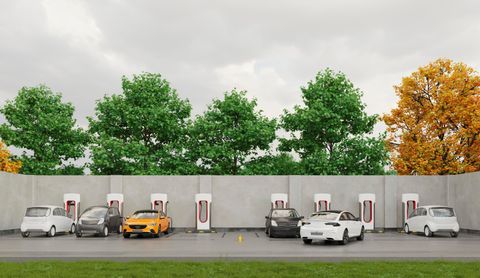
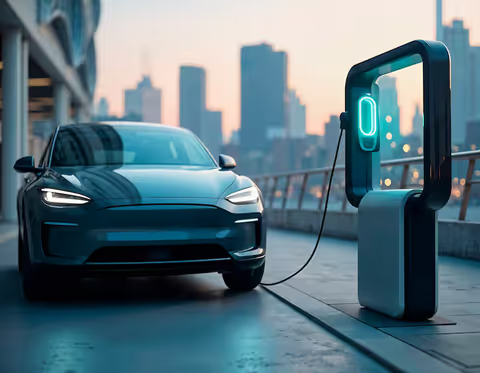
Their primary purpose is to replace conventional fuel refueling with a cleaner energy alternative. EV charging infrastructure supports passenger cars, commercial fleets, and public transport systems, helping reduce emissions and dependence on fossil fuels.
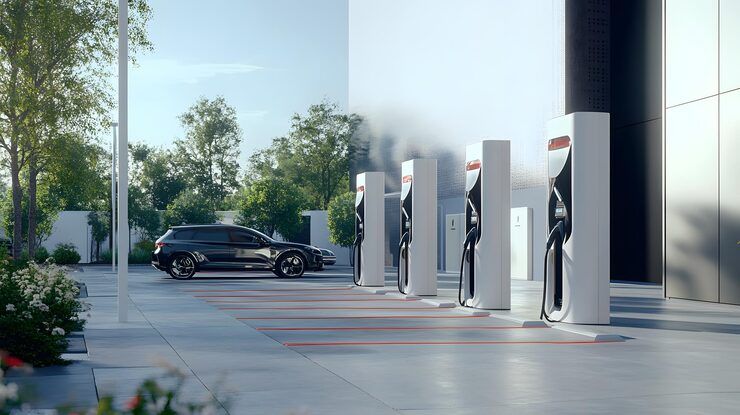
How EV Charging Stations Work
EV charging stations deliver electricity from the grid to a vehicle’s battery through a controlled system. The process involves power conversion, communication protocols, and safety mechanisms.
Electricity flows from the power source to the charging unit, which regulates voltage and current based on the vehicle’s battery management system. Communication between the charger and vehicle ensures safe and optimized charging.
Charging can occur via alternating current (AC) or direct current (DC). AC charging requires onboard conversion within the vehicle, while DC fast charging supplies power directly to the battery, significantly reducing charging time.
Types of EV Charging Stations
Charging Levels
-
Level 1 Charging
Uses standard household outlets
Slow charging, suitable for overnight use -
Level 2 Charging
Requires dedicated equipment
Common in homes, workplaces, and public areas -
DC Fast Charging
High-speed charging for highways and commercial hubs
Can charge up to 80% in under an hour
Connector Types
- Type 1 (SAE J1772)
- Type 2 (Mennekes)
- CCS (Combined Charging System)
- CHAdeMO
- Tesla-specific connectors
Installation Types
- Residential charging stations
- Commercial charging stations
- Public charging networks
Key Components of EV Charging Stations
Hardware Components
- Charging unit (EVSE – Electric Vehicle Supply Equipment)
- Power converter
- Connector and cable
- Control system
Software and Network Systems
- Smart charging software
- User authentication systems
- Payment integration platforms
- Remote monitoring systems
Supporting Infrastructure
- Electrical grid connection
- Energy storage systems
- Renewable energy integration (solar, wind)
Importance of EV Charging Infrastructure
EV charging stations are essential for scaling electric mobility. Without widespread charging access, EV adoption would face major limitations.
They provide:
- Range confidence for EV users
- Support for long-distance travel
- Reduced greenhouse gas emissions
- Integration with renewable energy systems
Charging infrastructure also contributes to smart city development and energy efficiency strategies.
Real-World Use Cases
EV charging stations are deployed across various sectors:
- Urban residential complexes for daily charging
- Highways for long-distance travel support
- Commercial fleets such as delivery vehicles and taxis
- Public transportation systems including electric buses
- Corporate offices supporting employee EV adoption
Problems Solved by EV Charging Stations
- Eliminates dependency on fossil fuels
- Reduces urban air pollution
- Supports energy diversification
- Enables cleaner transportation systems
- Encourages adoption of electric vehicles
Table: Comparison of Charging Levels
| Charging Type | Power Output | Charging Time | Typical Location | Use Case |
|---|---|---|---|---|
| Level 1 | 2–5 kW | 8–20 hours | Homes | Overnight charging |
| Level 2 | 7–22 kW | 3–8 hours | Homes, offices, public | Daily charging |
| DC Fast Charging | 50–350 kW | 20–60 minutes | Highways, stations | Long-distance travel |
Key Features of Modern EV Charging Stations
Smart Capabilities
- Real-time monitoring
- Mobile app integration
- Remote diagnostics
Energy Efficiency
- Load balancing
- Peak demand management
- Renewable energy integration
User Experience
- Contactless authentication
- Digital payment systems
- Charging session tracking
Recent Trends and Developments (2025–2026)
The EV charging ecosystem has evolved significantly over the past year.
- In 2025, ultra-fast charging technology expanded, with chargers exceeding 350 kW becoming more common in major markets
- Governments increased investment in charging networks to support EV adoption targets
- Wireless charging pilots gained traction in urban mobility projects
- Vehicle-to-grid (V2G) technology advanced, allowing EVs to supply energy back to the grid
- AI-based smart charging systems improved efficiency and reduced grid stress
These developments highlight a shift toward faster, smarter, and more integrated charging solutions.
Laws, Policies, and Regulations
Governments worldwide are introducing regulations to support EV infrastructure growth.
Common Policy Areas
- Mandatory EV charging points in new buildings
- Incentives for charging infrastructure deployment
- Standardization of charging connectors
- Safety and compliance regulations
India-Specific Developments
- National Electric Mobility Mission Plan (NEMMP)
- FAME II scheme promoting EV adoption
- Guidelines for public charging infrastructure issued by the Ministry of Power
These policies aim to accelerate EV adoption and ensure infrastructure readiness.
Useful Tools and Platforms
Charging Network Platforms
- ChargePoint
- EVgo
- Blink Charging
- Tata Power EZ Charge
Navigation and Apps
- PlugShare
- Google Maps EV routing
- ChargeHub
Learning Resources
- International Energy Agency (IEA) reports
- Government EV policy portals
- Automotive research publications
These tools help users locate charging stations, monitor usage, and stay informed about EV trends.
Frequently Asked Questions
What is an EV charging station?
An EV charging station is a system that supplies electricity to recharge electric vehicles through controlled and safe power delivery.
How long does it take to charge an EV?
Charging time depends on the charger type. It can range from under an hour with fast chargers to several hours with standard home charging.
Are EV charging stations safe?
Yes, they are designed with safety mechanisms such as automatic shutoff, temperature monitoring, and secure communication protocols.
Can EV charging stations use renewable energy?
Yes, many stations integrate solar or wind energy, making the charging process more sustainable.
What is the difference between AC and DC charging?
AC charging requires conversion inside the vehicle, while DC charging supplies power directly to the battery, enabling faster charging.
Conclusion
EV charging stations are a foundational element of the electric mobility ecosystem. They enable the transition from traditional fuel-based transportation to cleaner, more sustainable alternatives. With advancements in fast charging, smart technology, and supportive government policies, charging infrastructure is becoming more efficient and accessible.
As innovation continues, EV charging stations will play a vital role in shaping future transportation systems, reducing environmental impact, and supporting global sustainability goals.