The primary purpose of ERP solutions is to centralize data, improve operational efficiency, and enable informed decision-making. Instead of relying on disconnected tools or manual processes, organizations use ERP systems to maintain consistency, accuracy, and visibility across departments.
How ERP Solutions Work
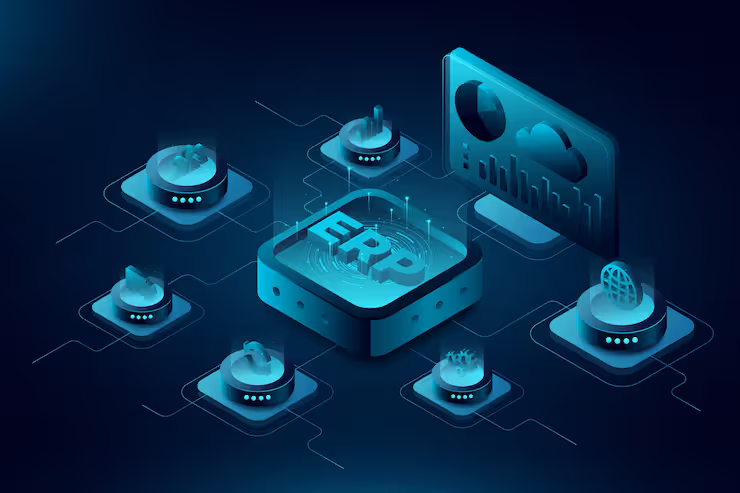
ERP systems operate through a centralized database that collects and processes information from different business functions. Each department interacts with the system through modules tailored to specific operations, but all data is interconnected.
For example, when a sales order is entered:
- Inventory levels are automatically updated
- Financial records are adjusted in real time
- Production schedules may be triggered
- Delivery logistics are aligned
This interconnected structure ensures that every department works with the same updated information, reducing duplication and errors.
Importance of ERP Solutions in Modern Businesses
ERP solutions play a critical role in improving efficiency and scalability. As businesses grow, managing operations manually or with separate systems becomes complex and inefficient.
Key benefits include:
- Improved data accuracy and reduced redundancy
- Real-time reporting and analytics
- Enhanced collaboration across departments
- Better compliance with financial and regulatory standards
- Scalable infrastructure for business expansion
ERP systems are widely used in industries such as manufacturing, healthcare, retail, logistics, and finance.
Real-World Use Cases of ERP Solutions
ERP systems are applied in various scenarios to solve operational challenges:
- Manufacturing companies use ERP to manage production planning, raw materials, and quality control
- Retail businesses track inventory, sales, and customer data in real time
- Healthcare organizations manage patient records, billing, and compliance
- Logistics firms optimize supply chain operations and delivery schedules
- Financial institutions use ERP for accounting, auditing, and reporting
These use cases demonstrate how ERP solutions streamline complex processes and improve productivity.
Key Features of ERP Solutions
Core Features
- Centralized database management
- Real-time analytics and reporting
- Automation of repetitive tasks
- Integration with third-party systems
- Role-based access control
Advanced Capabilities
- Cloud-based deployment
- AI-driven insights and forecasting
- Mobile accessibility
- Customizable dashboards
- Multi-language and multi-currency support
Types of ERP Solutions
Deployment Types
- On-premise ERP: Installed locally on company servers
- Cloud ERP: Hosted on remote servers and accessed via internet
- Hybrid ERP: Combination of on-premise and cloud systems
Industry-Specific ERP
- Manufacturing ERP
- Healthcare ERP
- Retail ERP
- Financial ERP
Each type is designed to meet the unique needs of specific industries or operational models.
Components of ERP Systems
ERP systems consist of multiple modules that work together:
- Finance and Accounting
- Human Resource Management
- Supply Chain Management
- Inventory Management
- Customer Relationship Management (CRM)
- Procurement and Vendor Management
These modules can be implemented individually or as a complete suite depending on business requirements.
ERP Solutions Table Comparison
| Feature | On-Premise ERP | Cloud ERP | Hybrid ERP |
|---|---|---|---|
| Data Storage | Local Servers | Cloud Infrastructure | Mixed |
| Accessibility | Limited | Anywhere Access | Flexible |
| Scalability | Moderate | High | High |
| Maintenance Responsibility | Internal Team | Provider Managed | Shared |
| Initial Setup | Complex | Faster Deployment | Moderate |
Problems ERP Solutions Help Solve
ERP systems address several common business challenges:
- Data silos between departments
- Manual errors in data entry
- Lack of real-time visibility
- Inefficient resource utilization
- Difficulty in compliance and reporting
By integrating processes, ERP solutions eliminate these inefficiencies and provide a structured workflow.
Recent Trends and Developments (2025–2026)
ERP technology has evolved significantly in recent years, driven by digital transformation and advanced technologies.
- In 2025, AI-powered ERP systems gained traction for predictive analytics and automation
- Cloud ERP adoption increased globally due to flexibility and remote accessibility
- Integration with Internet of Things (IoT) improved real-time monitoring in manufacturing
- Low-code and no-code customization tools became more common in 2026
- Enhanced cybersecurity frameworks were introduced to protect enterprise data
These advancements are making ERP systems more intelligent, accessible, and adaptable.
Regulations and Compliance Considerations
ERP systems often support compliance with various regulations:
- Financial reporting standards such as IFRS and GAAP
- Data protection regulations like GDPR
- Industry-specific compliance in healthcare and manufacturing
- Taxation and audit requirements
Organizations use ERP systems to maintain accurate records and ensure regulatory adherence.
Useful ERP Platforms and Learning Resources
Popular ERP Platforms
- SAP ERP
- Oracle ERP Cloud
- Microsoft Dynamics 365
- NetSuite ERP
- Odoo ERP
Learning Resources
- Online certification programs in ERP systems
- Vendor documentation and training portals
- Business analytics and data management courses
- Industry webinars and whitepapers
These resources help professionals understand ERP implementation and management.
Frequently Asked Questions
What is the main purpose of ERP solutions?
ERP solutions are designed to integrate and automate business processes, improving efficiency and data accuracy across departments.
Are ERP systems suitable for small businesses?
Yes, many cloud-based ERP systems are scalable and can be adapted for small and medium-sized businesses.
What is the difference between ERP and CRM?
ERP focuses on internal business processes, while CRM focuses on managing customer relationships and interactions.
How long does ERP implementation take?
Implementation timelines vary depending on complexity, ranging from a few months to over a year.
Is cloud ERP secure?
Modern cloud ERP systems include advanced security measures such as encryption, access control, and regular updates.
Conclusion
ERP solutions are essential tools for modern organizations aiming to streamline operations and improve efficiency. By integrating multiple business functions into a unified system, ERP enables real-time insights, better decision-making, and scalable growth.
With advancements in cloud computing, artificial intelligence, and automation, ERP systems continue to evolve, offering more flexibility and intelligence than ever before. Organizations that adopt and effectively manage ERP solutions can achieve higher productivity, improved compliance, and long-term operational success.